In the intricate dance of SEO, the nofollow vs dofollow debate sits at the heart of every smart link-building strategy. Links are your currency but understanding what is dofollow and nofollow is the difference between building authority and inviting a Google penalty. Whether you’re managing nofollow links on a high-traffic blog or pursuing dofollow external links from editorial publishers, choosing the right attribute determines how search engines perceive your entire site. To fully grasp how external links in SEO function, you first need to understand how they differ from internal links and why both matter for SEO. Let’s unravel when and how to use each, with real-world examples, Google’s latest guidelines, and a peek at how Link Rhinos simplifies ethical link-building.
What Are Nofollow and Dofollow Links?
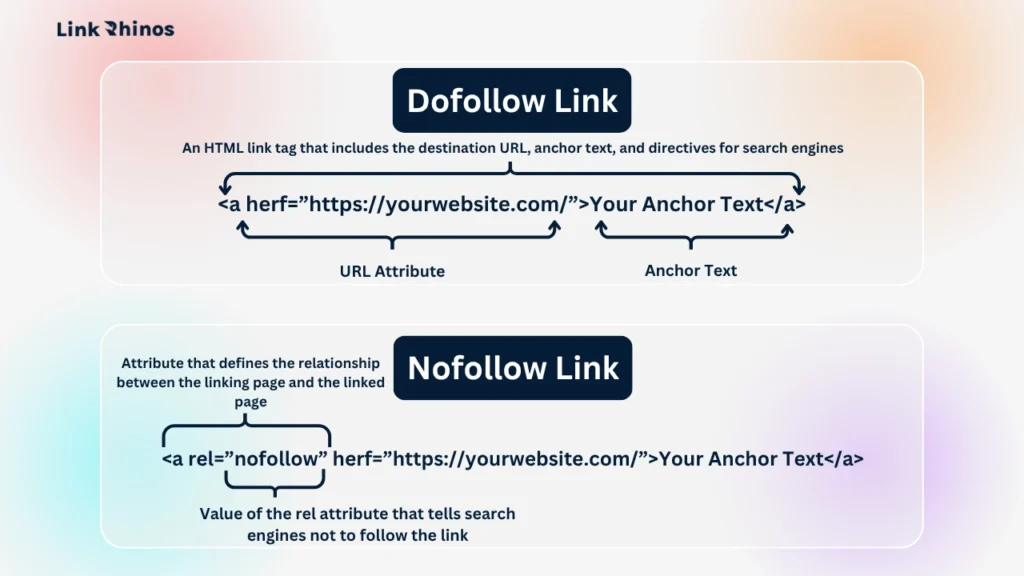
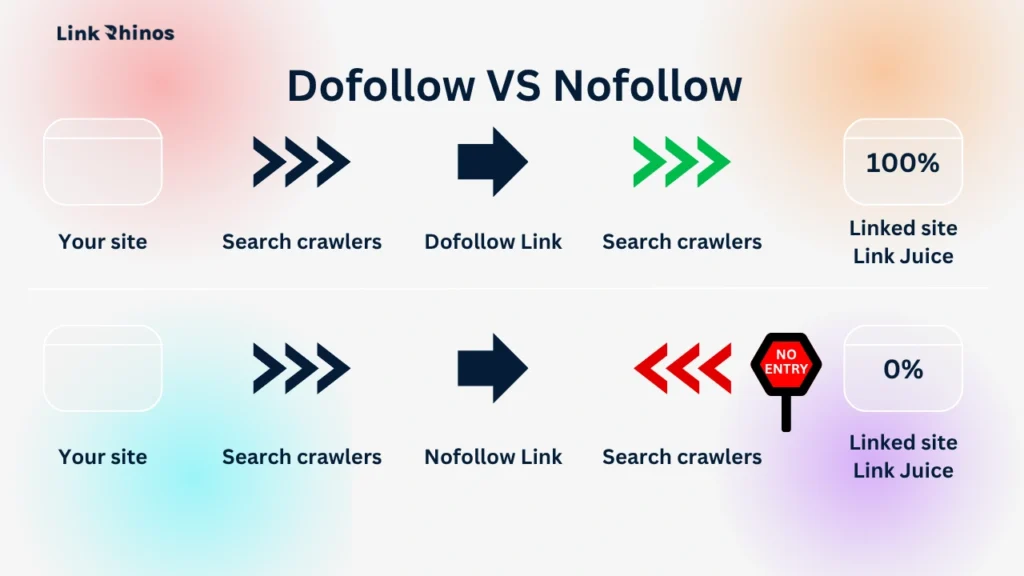
The dofollow and nofollow distinction comes down to a single HTML attribute that controls whether PageRank flows to the destination. Here’s what dofollow and nofollow mean in practice:
- Dofollow Links: The default. They pass “link equity” (SEO value) to the linked site, signalling trust to search engines. Every dofollow link you earn from a reputable source strengthens your domain authority.
- Nofollow Links: Include the
rel="nofollow"attribute, instructing search engines not to pass equity. A nofollow link still drives referral traffic. it just doesn’t transfer PageRank.
Google’s Golden Rule: Use nofollow for untrusted, paid, or user-generated content to avoid endorsing spam. When deciding dofollow or nofollow, always ask whether you’re genuinely endorsing the linked content.
When to Use Nofollow Links
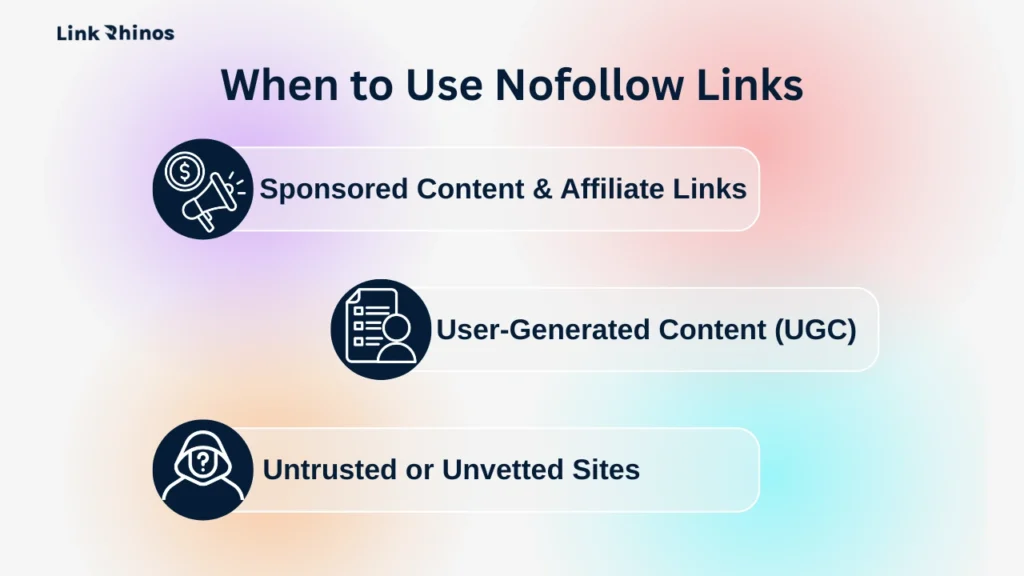
When to use nofollow links is one of the most searched questions in technical SEO, and for good reason. Misapplying them can cost you rankings; ignoring them entirely risks penalties. There are three core scenarios where nofollow links are essential:
1. Sponsored Content & Affiliate Links
- Example: A blog post reviewing a product you’re paid to promote.
- Why: Google requires disclosure to prevent manipulative link schemes.
- Code: <a href=”https://example.com” rel=”sponsored”>Best Coffee Maker</a>
2. User-Generated Content (UGC)
- Example: Blog comments, forum posts, or social media links.
- Why: Users could spam your site with low-quality backlinks nofollow pointing outward, harming your trust signals.
- Code: <a href=”https://example.com” rel=”ugc”>Check this out</a>
3. Untrusted or Unvetted Sites
- Example: Linking to a site you haven’t personally reviewed.
- Why: Protect your site from associating with potential spam. Always apply nofollow external links to any source you cannot fully vouch for.
When to Use Dofollow Links
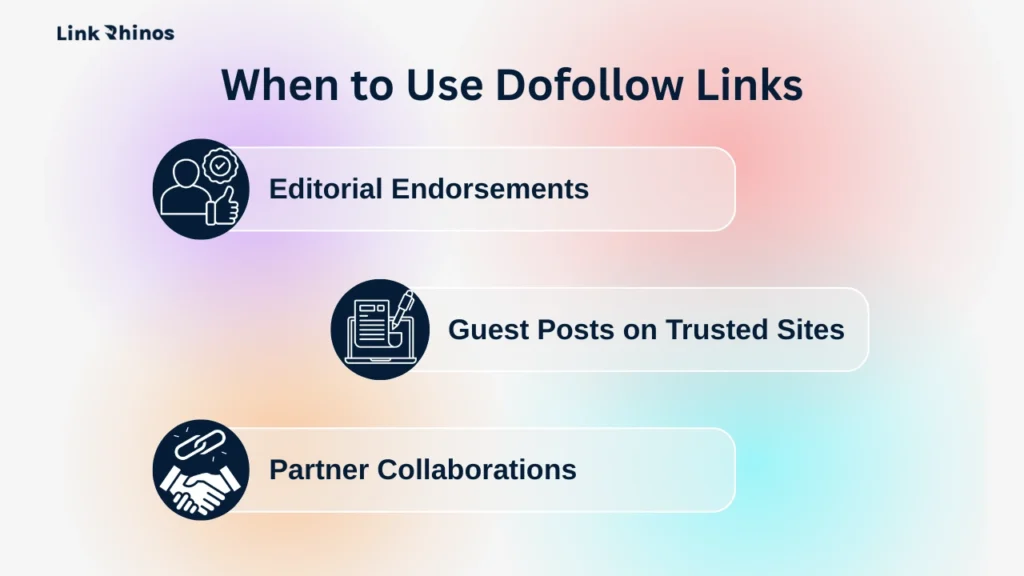
Dofollow links pass full link equity and should be reserved for sources you genuinely trust and editorially endorse. In the dofollow vs nofollow decision, ask yourself: “Would I cite this in a report?” If yes, dofollow is appropriate. Dofollow external links are the backbone of any authoritative backlink profile. they signal to Google that you trust the destination enough to share your site’s PageRank with it.
1. Editorial Endorsements
- Example: Citing a peer-reviewed study in your article.
- Why: Shows you trust the source, passing authority naturally.
2. Guest Posts on Trusted Sites
- Example: A guest blog on a high-DA industry site.
- Why: Earns dofollow backlinks that directly raise your domain authority. The most valuable asset in off-page SEO.
3. Partner Collaborations
- Example: Linking to a client’s case study on your portfolio.
- Why: Ethical, mutual promotion with no paid exchange. These dofollow external links build lasting authority for both parties.
Nofollow vs. Dofollow Backlinks: What’s the Real Difference?
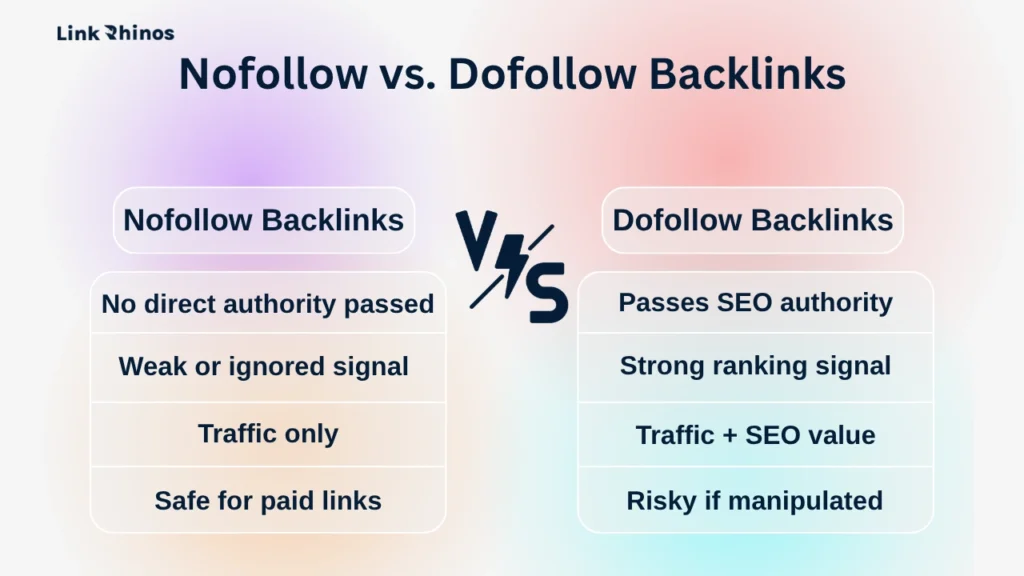
The nofollow backlinks vs dofollow debate comes up constantly in link-building strategy. Here’s how they truly compare:
- PageRank transfer: Dofollow vs nofollow backlinks differ primarily here: Dofollow passes equity, nofollow does not (though Google may still use nofollow as a hint).
- Anchor text weight: Dofollow links pass anchor text signals; nofollow links carry far less weight for keyword rankings.
- Referral traffic: Both nofollow links and dofollow links can send referral traffic-the difference is purely about PageRank.
- Penalty risk: Buying dofollow links violates Google’s guidelines. Properly labelling paid placements as nofollow links in SEO keeps you safe.
A healthy backlink profile should contain a mix of both. Having only dofollow links looks unnatural. Real authority sites accumulate backlinks, nofollow and dofollow organically.
Nofollow Internal Links: Should You Use Them?
Many webmasters confuse nofollow internal links with a PageRank sculpting strategy. In reality, applying nofollow to internal links is almost always counterproductive. When you nofollow an internal page, Google may still crawl it, but won’t pass link equity, effectively wasting your own internal authority.
The only exception: pure utility pages (login, cart, or admin URLs) where you don’t want to waste crawl budget. For all standard content pages, keep internal links nofollow-free to ensure equity flows freely across your site architecture.
Google’s Guidelines: Updates You Can’t Ignore
- 2019 Change: Nofollow became a “hint” rather than a directive, but still treat it as a rule.
- New Attributes: Use rel=”sponsored” for paid links and rel=”ugc” for user-generated content.
- Penalty Risk: Failing to nofollow paid links can lead to manual actions or lost rankings. This applies to backlink nofollow compliance on every sponsored placement.
If you’re worried about past linking practices, our guide to ethical external linking can help you clean up your act, and you may need to disavow toxic backlinks if you’ve already been hit with a penalty.
How to Spot Nofollow Links on Any Page
When auditing a partner site or checking your own profile, a nofollow Chrome extension is the fastest way to get a visual overview. This type of nofollow extension highlights all nofollow-tagged links directly in your browser, no developer tools needed. Popular options include NoFollow Simple and the MozBar. Once installed, the nofollow extension colour-codes every link so you can immediately see which ones pass equity and which are blocked.
Strategic Use Cases
- Case Study 1: A fashion blog uses nofollow for affiliate links but dofollow for a designer interview. Result? Higher rankings for non-sponsored content.
- Case Study 2: A tech forum auto-applies
rel="ugc"to every user-submitted link. Spam stops cold, community engagement stays high, and the site avoids any nofollow link penalty risk from bad actors.
How Link Rhinos Takes the Guesswork Out of Linking
Building ethical dofollow and nofollow links is a minefield of rules, but Link Rhinos makes it effortless. Our platform:
- Automates Compliance: Auto-adds nofollow to sponsored collaborations and flags risky links.
- Vets Partners: Connect with trusted sites for dofollow links via guest posts, resource swaps, and editorial placements.
- Tracks Performance: Monitor how your link strategy impacts DA, traffic, and rankings.
Example: A travel blogger uses Link Rhinos to secure 10 dofollow external links from high-authority travel publications and 5 nofollow affiliate links, all while staying penalty-free.
For teams ready to scale their efforts, pairing Link Rhinos with a documented link-building SOP ensures consistency and quality as you grow.
Your Action Plan
- Audit Existing Links: Use Ahrefs/SEMrush to find non-compliant links. A nofollow extension in your browser gives you a quick visual check. Free tools can also help you audit potential partners.
- Add Attributes: Apply
nofollow,sponsored, orugcwherever needed. If you’re unsure about a link, nofollow on links is the safer default. - Collaborate Wisely: Use Link Rhinos to build dofollow links from vetted partners.
Conclusion
Understanding the full picture of dofollow and nofollow links, from when to apply them to how they affect your backlink profile, is non-negotiable for sustainable SEO. Nofollow links in SEO protect you from penalty; dofollow links power your authority. Use both intentionally, and you’ll build a backlink profile that’s both powerful and penalty-proof.
And to answer a question we hear often: are nofollow outbound links good? Absolutely, they are essential for compliance whenever you link to paid, sponsored, or unvetted sources. Treating every external link as dofollow is precisely what triggers manual actions. The smart approach is to master the nofollow vs dofollow balance: earn strong editorial dofollow links, and responsibly tag everything else as nofollow.
By following Google’s guidelines and leveraging tools like Link Rhinos, you’ll turn your link strategy into a competitive advantage, one that compounds over time.

Ready to Master Ethical Linking?
👉 Join Link Rhinos to automate compliance, find partners, and turn links into rankings.
Why Link Rhinos?
- No Penalties: Built-in safeguards for nofollow/dofollow compliance.
- Time Saved: Skip manual outreach with our partner network.
- Transparency: Track every link’s impact in real time.
Your site’s authority starts with the right links. Choose wisely, build strategically, and watch your SEO soar!