Most SaaS founders spend months chasing backlinks without ever stopping to ask a more basic question: Are the links leaving their site working against them? Outbound and inbound external links are two sides of the same trust equation. Get either one wrong, and you’re quietly leaking ranking potential.
What is an external link in SEO is a more layered question than it looks, because how Google interprets a link depends on direction, relevance, and link type all at once.
This post covers what external links actually are, what are external backlinks versus outbound links, the types of external links that carry real weight, and the mistakes that quietly tank your authority. By the end, you’ll know exactly what to fix and where to start.
What is an External Link
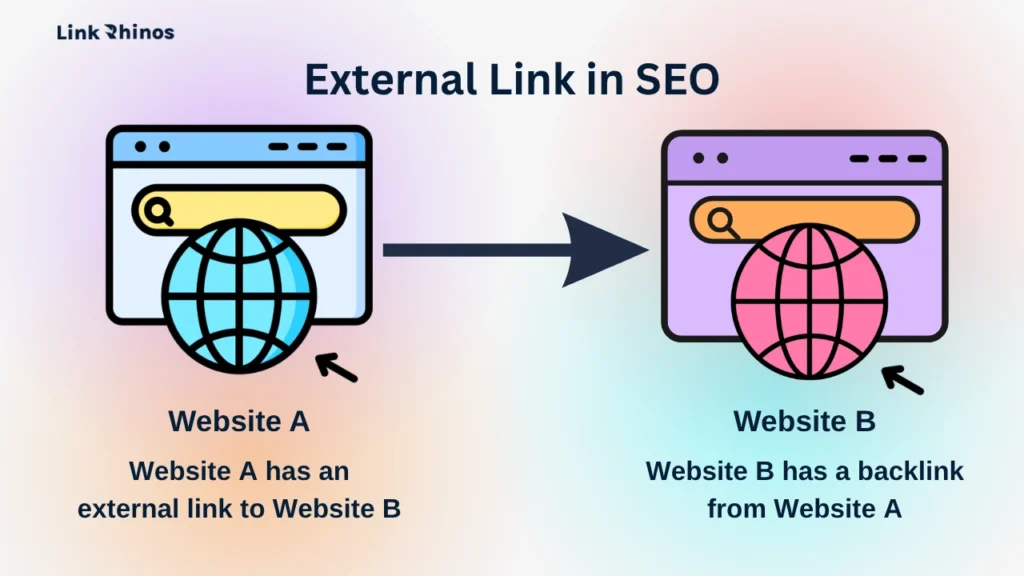
An external link is any hyperlink that points from one domain to a different domain. When your blog links to an Ahrefs data study, that’s an external link leaving your site. When a SaaS review platform links to your product page, that’s an external link arriving at your domain. The keyword is in a different domain – that’s what separates an external link from an internal one, which stays within the same site.
That directional distinction is where most people get confused. Google treats outbound links and inbound links as two separate signals, each contributing to how it evaluates your page’s credibility. Outbound external links tell Google you cite real sources. Inbound external links tell Google that others consider you a real source.
Both directions matter, and the way external links differ from internal links affects how you should be managing each one in your SEO strategy.
Inbound vs Outbound External Links
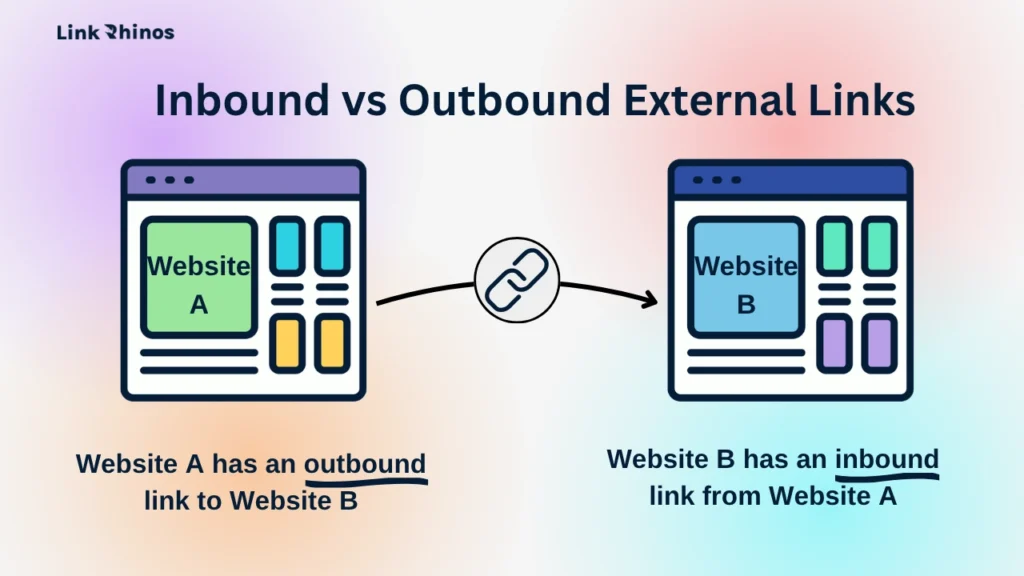
Every external link has a direction. Get clear on this early because the strategy for each is completely different.
Outbound External Links
Outbound external links are links your site sends to other domains. When you cite a Backlinko study inside a blog post or link to an official Google documentation page, those are outbound external links leaving your domain. They signal to Google that you reference credible, authoritative sources – which is a direct E-E-A-T signal. Done right, outbound linking positions your content as research-backed rather than self-contained opinion.
The mistake most SaaS founders make with outbound external links is treating them as a liability – worrying that sending traffic away hurts them. It doesn’t. Google’s own Quality Rater Guidelines explicitly reward pages that link to trusted, relevant sources. What actually hurts is linking out to thin, low-authority, or irrelevant domains – that’s the version you want to avoid.
Inbound External Links
Inbound external links – also called backlinks – are links that other domains send to your site. These are the ones that directly build your domain’s authority in Google’s eyes. A single inbound external link from a relevant, high-DR publication can shift rankings more than weeks of on-page optimisation. That’s because inbound links function as third-party endorsements – and Google weights them accordingly.
The key difference in how you manage each: outbound external links are fully in your control and should be audited regularly. Inbound external links require active acquisition through strategic link-building approaches or structured exchanges with vetted partners. Both need attention – ignoring either one leaves ranking potential on the table.
What Are External Backlinks
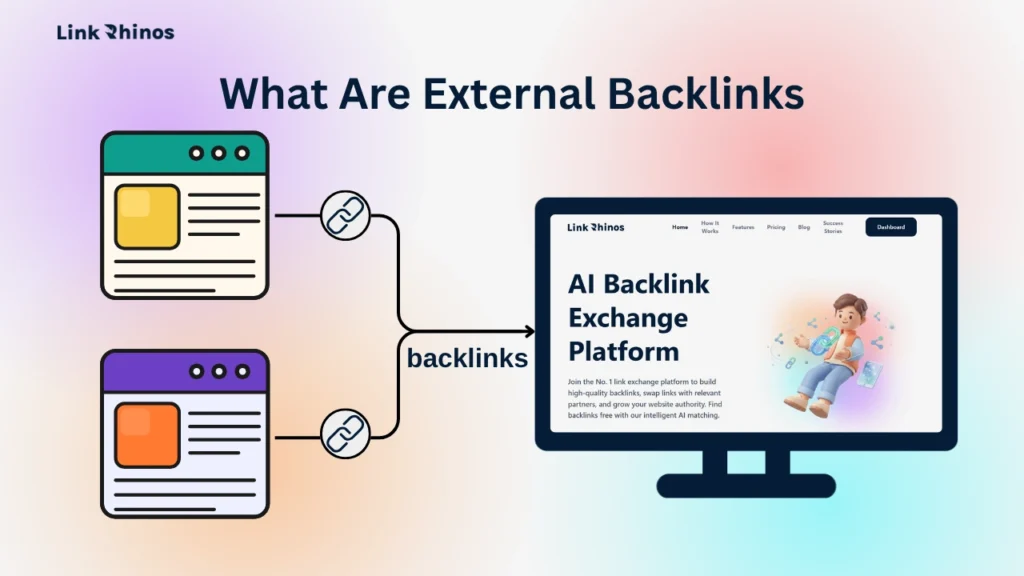
The terms get used interchangeably, but they’re not the same. What are external links, broadly? Any link crossing a domain boundary – in or out. What are external backlinks, specifically? The inbound subset – links that other sites send to your domain.
When SEOs talk about link building, they mean acquiring external backlinks. A single dofollow backlink from a DR 55 domain in your niche will move the needle more than 30 directory submissions from irrelevant sites. That’s because Google isn’t counting links – it’s weighing them.
What is external backlinks in practical terms? It’s your domain’s reputation score, distributed across every site willing to vouch for you with a link. The quality of who’s vouching matters more than how many are.
Before you start chasing backlinks anywhere, spend five minutes validating sites before a link exchange – it’ll save you from acquiring links that actively hurt your profile.
Types of External Links
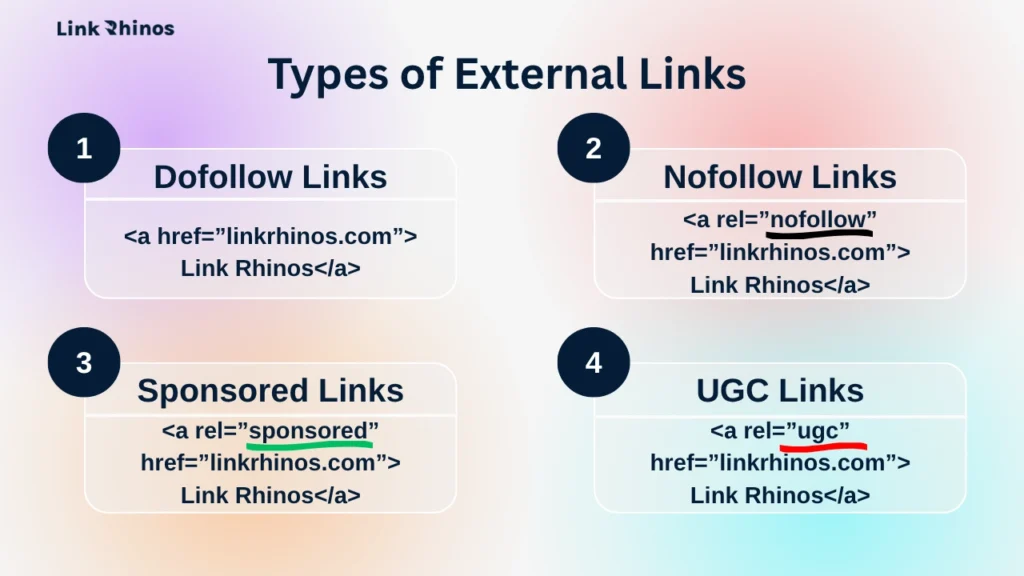
Not all external links carry equal weight. The type of link determines how much value passes between domains.
Dofollow Links
Dofollow links are the default. They pass link equity – what Google calls PageRank – to the destination page. Editorial links from blogs, publications, and resource pages are typically dofollow unless the site owner adds an attribute. These are the links that directly influence rankings and the ones worth building deliberately.
Nofollow Links
NoFollow links carry a rel="nofollow" An attribute that instructs Google not to pass PageRank. Most social media links, forum links, and links inside comment sections are nofollow. They appear in your backlink profile but contribute far less to ranking power. That said, a completely nofollow-free profile looks unnatural – some nofollow links are expected in any healthy domain.
Sponsored Links
Sponsored links require the rel="sponsored" attribute when a payment is involved. Google’s guidelines are clear on this – paid placements without proper attribution risk a manual penalty. If money changed hands for a link, tag it correctly.
UGC Links
UGC links (user-generated content) are applied to links in community posts, forums, and Q&A platforms. They’re usually nofollow by default and carry minimal link equity. They have branding value, but shouldn’t anchor your link building strategy.
Among the types of external links, dofollow editorial links from topically relevant domains are the most valuable category – and the hardest to earn at scale. Understanding nofollow vs dofollow fundamentals before you start any outreach will save you from chasing the wrong targets.
How External Links in SEO Shape Your Domain Authority
Here’s what trips up most SaaS founders: they treat what are external links as a volume game. More links, higher rankings. That logic stopped working around 2013.
What is external link in seo, in Google’s current model, is a relevance and trust signal – not a count. A backlink from a domain covering closely related topics passes meaningful equity. A backlink from a completely unrelated site in a different language? Minimal value, and potentially a flag. That’s precisely why external links carry so much importance in Google’s ranking system – they’re proxies for trust that’s hard to fake at scale.
The outbound side of external links in seo is equally underestimated. Pages that consistently cite authoritative primary sources – original research, official documentation, established platforms – signal to Google that the content is written by someone who actually knows the subject. That’s core to E-E-A-T, and it’s one reason using external links to build E-E-A-T should be a deliberate editorial policy, not an afterthought.
The sites that dominate search results aren’t just accumulating links – they’re building a coherent relevance network where external and internal links work together to signal topical depth.
Common External Linking Mistakes to Avoid
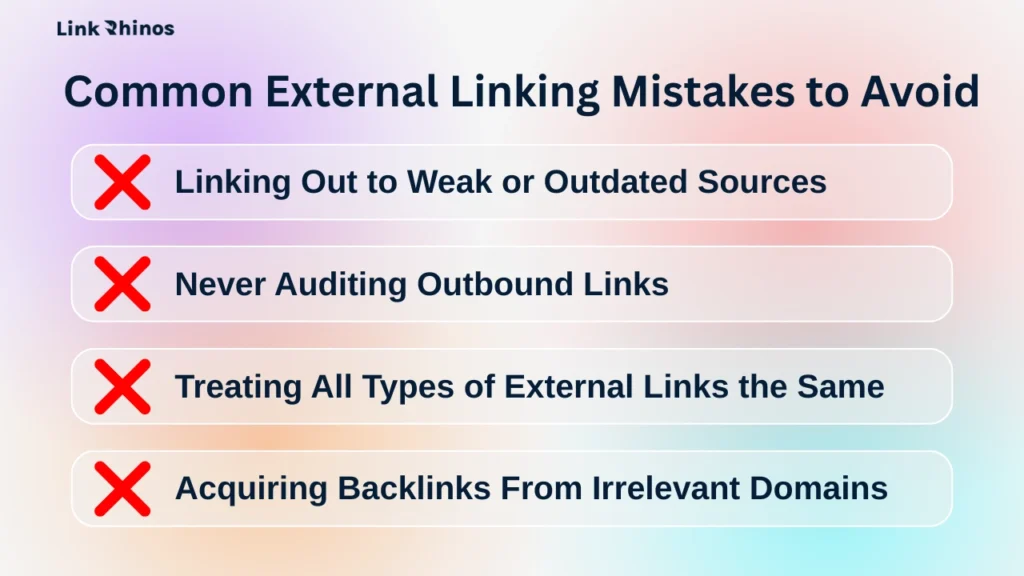
Linking Out to Weak or Outdated Sources
Every outbound external link is an indirect endorsement. Link to thin blogs, low-authority aggregators, or pages that have since changed content and you’re associating your credibility with theirs. Stick to primary sources: original studies, official documentation, platforms with verifiable authority.
Never Auditing Outbound Links
Most site owners check who’s linking to them – almost no one checks what their top pages are linking to. A single page with 12 outbound links to spammy or irrelevant domains can suppress its own ranking potential. Run your top traffic pages through a free SEO audit tool and clean up outbound links as part of your quarterly site maintenance.
Treating All Types of External Links the Same
A dofollow editorial backlink from a relevant DR 45 publication and a nofollow forum mention are not equivalent. They serve different purposes. Build primarily for dofollow editorial links, let the rest accumulate naturally. If you want a practical breakdown of exactly what to do – and what to avoid – with each link type, the external linking dos and don’ts covers the specifics before you start any outreach.
Acquiring Backlinks From Irrelevant Domains
What is an external link worth when it comes from a domain in a completely different niche? Functionally very little. Relevance is non-negotiable. A link from a legal directory to your SaaS productivity tool is a wasted entry in your backlink profile.
Bottom Line
What is an external link at its core is a vote of relevance – one that Google counts in both directions. The sites that compound their rankings over time aren’t passive about either outbound or inbound external links. They audit what they send out, build deliberately what comes in, and treat every link as a signal worth owning. Start with the audit this week – it’s faster than you think and the gaps are usually obvious once you look.

LinkRhinos matches SaaS sites with vetted, niche-relevant link partners based on topical alignment and DR range – no cold outreach, no spreadsheets. → linkrhinos.com/register.