External links, or outbound links, play a crucial role in SEO by enhancing credibility, user experience, and topical authority. If you’ve ever asked, “Are external links good for SEO?” – the answer is a clear yes, when used with intention. Understanding external links in SEO goes beyond simply pointing outward; it’s about building a content ecosystem that both readers and search engines trust. Here’s a structured breakdown of their importance and best practices for external linking in SEO:
Do External Links Help SEO?
External links for SEO serve a dual purpose: they signal to search engines that your content is well-researched, and they improve UX by pointing to authoritative resources. Does linking to other sites help SEO? Does linking to other websites help SEO? Both questions share the same answer: yes – seo linking to other websites is not just tolerated by Google, it’s encouraged as part of a natural, user-first link profile.
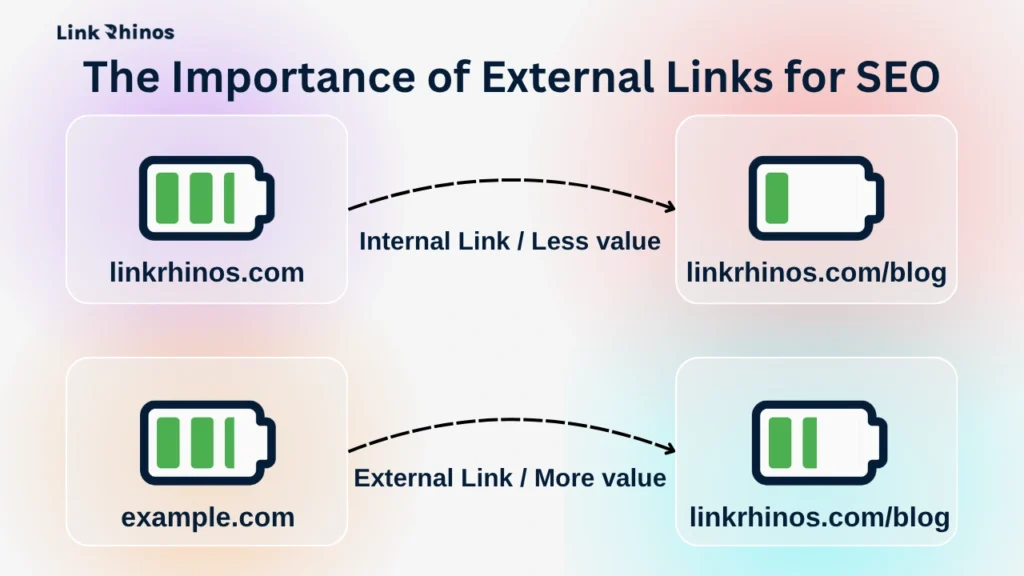
Before diving into external links, it’s helpful to understand how they differ from internal links and why you need both for a healthy SEO strategy.
1. Enhancing Credibility and Trust
Authority Signaling
Linking to reputable, authoritative sources (e.g., government sites, academic journals, or industry leaders) signals to search engines that your content is well-researched and trustworthy. For example, citing NASA in an article about climate change boosts your page’s reliability. SEO external links to high-authority domains are one of the clearest trust signals your content can carry – reinforcing both credibility and topical depth.
Avoiding Spam
Linking to low-quality or irrelevant sites can harm your SEO. Always prioritize high-quality, relevant domains to maintain trust. Think of it this way: just as strong external backlinks from authoritative domains build your own credibility, what are external backlinks you send out should reflect the same editorial judgment. External backlinks SEO works in both directions – the quality of who you link to matters as much as who links to you.
2. Improving User Experience (UX)
Resource Value
External links provide readers with additional information, keeping them engaged and reducing bounce rates. For instance, linking to a detailed study or tool enhances the depth of your content.
Balanced Linking
Avoid excessive outbound links that disrupt readability. Aim for relevance and value over quantity. This is especially true for sitewide links SEO concerns – footer or navigation links pointing to external destinations en masse can dilute link equity and trigger quality flags.
3. Establishing Topical Relevance
Niche Alignment
The relationship between links and SEO is most pronounced in terms of niche authority. Links to sites within your niche (e.g., a tech blog linking to software reviews) reinforce your content’s focus, helping search engines understand your site’s expertise. External links in SEO act as editorial endorsements that place your content inside a specific topical neighbourhood.
Contextual Clarity
Links clarify the context of your content. For example, linking to a medical journal in a health article strengthens topical relevance. What is external link in SEO, at its core? An editorial signal that communicates relevance to readers and to ranking algorithms alike.
4. Anchor Text Optimization
Natural Language
Use descriptive, natural anchor text (e.g., ‘according to recent climate studies’) instead of keyword-stuffed phrases. For a complete breakdown of anchor text types and their SEO impact, see our guide. Over-optimization (e.g., ‘best SEO tools’) can appear manipulative.
Relevance
Ensure the anchor text aligns with the linked content’s topic.
5. Technical Considerations
Followed vs. Nofollow
- Use the following links (default) to endorse credible sources.
- Apply nofollow attributes (rel=’nofollow’) for untrusted or paid links to avoid passing equity (e.g., affiliate links). Not sure when to use each? Here’s when to use nofollow vs. dofollow.
Link Equity
While external links don’t directly boost your SEO like backlinks, they contribute to a natural link profile, which search engines favour. External equity links – dofollow outbound links pointing to authoritative sources – demonstrate editorial confidence and reinforce content legitimacy. External links for SEO carry the most strategic weight when target pages are relevant, and equity passes with a clear purpose.
6. Strategic Benefits
Reciprocity Opportunities
External link building – the practice of earning inbound links is a separate discipline, but being a generous, well-sourced linker increases the likelihood you’ll be cited in return. A deliberate SEO external link strategy treats outbound linking and link acquisition as complementary activities, not competing ones.
Algorithmic Favor
Google’s guidelines emphasize natural linking patterns. Relevant, user-focused SEO external links align with E-E-A-T (Expertise, Authoritativeness, Trustworthiness). SEO external linking done well is not just a ranking tactic – it’s a trust signal baked into how search engines evaluate content quality. For niche sites, here’s how to use external links specifically to boost E-E-A-T.
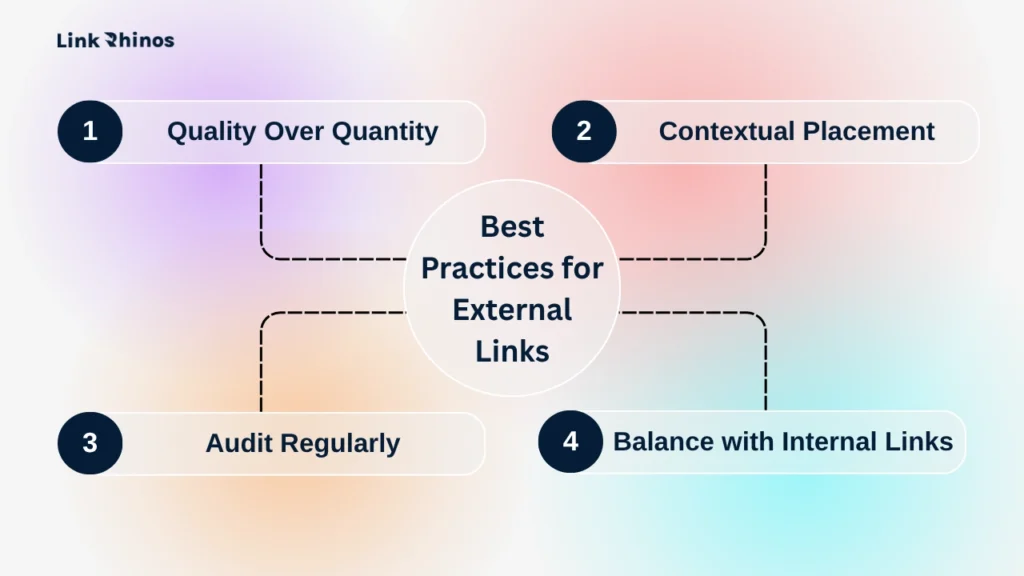
Best Practices for External Links
Quality Over Quantity
Link only to high-authority, relevant sites. External linking for SEO is most effective when every outbound link serves a clear editorial purpose and points to a domain your audience can genuinely trust.
Contextual Placement
Insert links where they add value (e.g., citations, further reading). Linking to other websites SEO best practice is always in-content, contextual placement – never forced or decorative.
Audit Regularly
Use tools like Ahrefs or SEMrush to check for broken or toxic links. If you find toxic links during your audit, here’s how to disavow them safely.
Balance with Internal Links
Maintain a mix of internal and external links to guide users and distribute page authority.
Conclusion
External links and SEO share a relationship built on trust, relevance, and editorial judgment. Are external links good for SEO? Unequivocally yes – when they point to quality sources and integrate naturally into your content. External linking SEO is not a secondary concern; it’s a core pillar of any strategy that satisfies both users and search engines. Whether you’re asking “does linking to other sites help SEO?” or “do external links help SEO?” – the answer is the same: yes, when done with purpose. Focus on relevance, quality, and natural integration to maximize their impact.

External links are a cornerstone of ethical SEO, fostering trust, enhancing UX, and clarifying content context. When used strategically, they strengthen your site’s authority and align with search engine guidelines. Focus on relevance, quality, and natural integration to maximize their impact.